FAQs
We understand that proposed developments such as the Ely Valley Solar Farm will generate interest, and you’ll have questions for us. We’ve collated some FAQs to hopefully answer some of your queries, with further FAQs to be added in future updates.
Why are solar farms being constructed?
Urgent action is needed to achieve net zero and address the challenge of climate change.
Generating renewable energy is a key part of that commitment. Solar farms are a simple and established technology providing a source of safe and clean energy which produces zero emissions when in operation.
Solar projects have a low visual impact potential if designed correctly, have no moving parts, meaning maintenance requirements are low through the lifetime of the project, and are considered ‘temporary’ as they are decommissioned at the end of their lifetime (40 years).
Biodiversity enhancements, and ongoing sheep grazing amongst the panel arrays means that this technology can easily operate alongside traditional land uses.
Why this location?
Site selection is a critical part of the solar farm development process. Our selection process is based on a number of factors including the availability of export capacity to the electrical distribution network (the ‘grid’) and the distance of the facility to the point of connection, environmental constraints such as proximity to sensitive receptors (including residential properties), topography, current use of the land and the opportunity for vehicle access.
The proposed development site is considered suitable to accommodate a proposal of this scale and nature.
What will the development look like?
The proposed development comprises a ground mounted solar farm together with associated equipment and infrastructure likely to consist of:
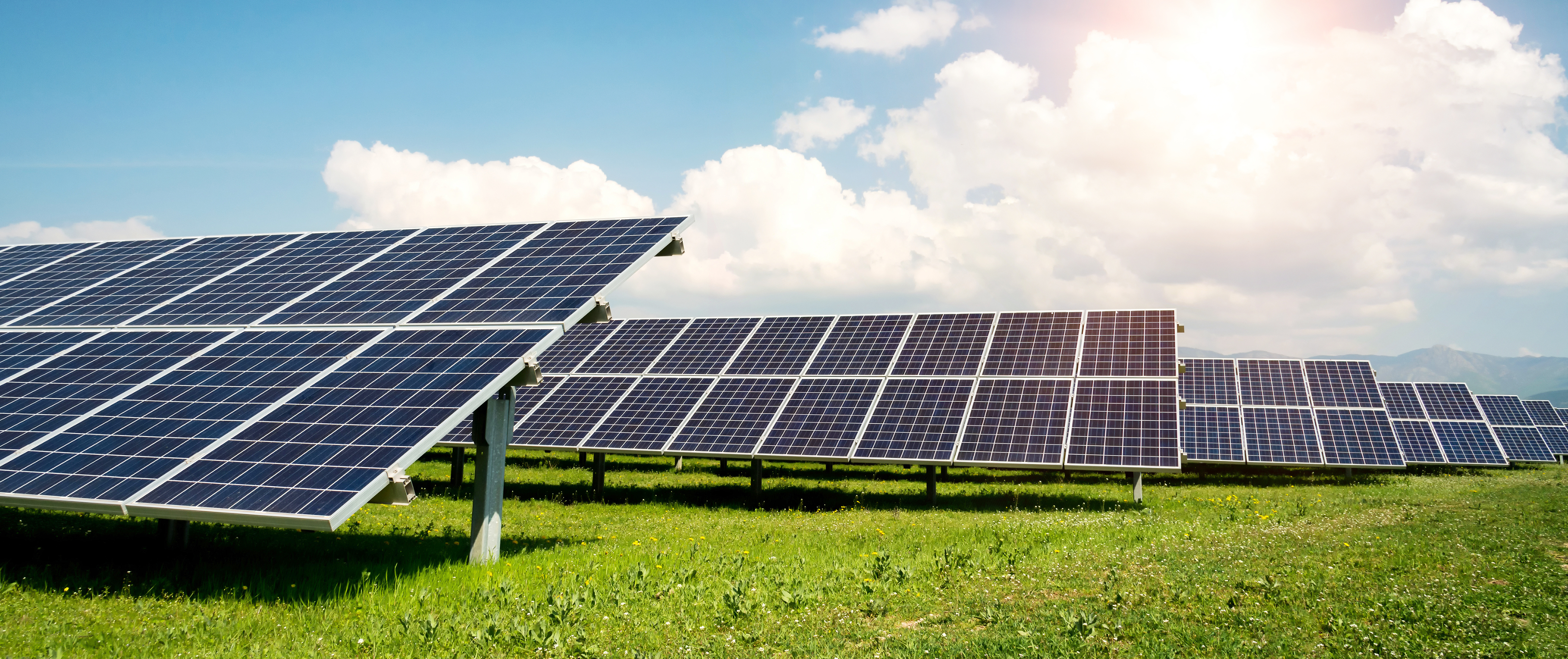
- The solar panels which are based on a simple metal framework and placed into the ground, do not require substantial foundations. The solar panel typically have a maximum height of 3m.
- A series of inverters.
- A number of transformer and switchgear substations.
- A Customer Substation building and DNO Substation building.
- Boundary fencing (very similar to deer fencing) around the edge of the site, with gates for access.
- An inward facing CCTV system located at strategic points around the site.
- Associated access tracks and cabling connecting transformer and switchgear substations.
- Storage container(s) for spare parts and for relevant communications and monitoring equipment.
What about visual impact?
To assess the impact on the landscape, a detailed Landscape & Visual Impact Assessment has been prepared. The site has containment from wider views by existing trees and hedgerows. Over time, the visual impact from the solar farm will be reduced further with establishment and growth of tree and hedgerow planting proposed between and around the field parcels.
How will this affect the use of agricultural land?
The land we propose to use can continue to be used for agricultural purposes (such as for grazing sheep) or for biodiversity enhancement opportunities following installation of the panels. The site will be operational for 40 years, after which it will return to its current use.
Why not just use brownfield, industrial land, rooftop solar?
Prior to selecting this site, we undertook a full review of the potential brownfield land in the area. Unfortunately, the land that existed was either already being used or was not suitable in size to be a viable option. In terms of rooftop solar, this has a vital role to play in achieving net zero but unfortunately is currently unviable for many households due to the high upfront costs, or the shape/material of older/pitched rooftops.
Will the solar farm generate noise?
Solar farms are quiet energy generating facilities. They have very few moving parts and as such require less ongoing maintenance and generate little noise or vibration. Noise modelling and assessment works have been undertaken to ensure that the proposal does not result in adverse changes to baseline noise conditions.
To manage noise through construction, our Construction Traffic Management Plan will provide clear details of proposed access arrangements, the anticipated programme, construction vehicle numbers and type, construction worker numbers and the proposed construction hours. This will need to be agreed with the local planning authority prior to the start of construction.
Will there be an impact on our local biodiversity?
Solar farms result in minimal disturbance to the ground and can play a role in enhancing local biodiversity, for example through planting a range of species rich wildflower mix in field margins, creating a more diverse habitat and creating pollen rich margins for bees and butterflies.
We are fully committed to providing biodiversity enhancements across the site whilst allowing continued public access, this is a key aspect of our application to compliment the wider net zero gain.
How long would it take to build?
The construction will last for approximately 12 months and once complete the development will operate for 40 years, when the site will be decommissioned and the land returned to its current use.
A temporary set down and vehicle parking area will be provided for the construction phase within the site boundary.
What impact will the construction have on our local roads and highways?
The vehicle movements throughout the construction phase of the development will be detailed in the Construction Traffic Management Plan, this forms part of our planning application. Our own initial findings suggest the construction phase of the development will not impact the existing road network.
Longer term, once operational, traffic movements will be minimal, with the site being visited for occasional routine maintenance.
Who will decide whether or not this project receives planning permission?
A planning application will be made to Rhondda Cynon Taf County Borough Council who will make the decision on whether to grant planning permission in their role as Local Planning Authority. Once submitted, details of the planning application will be available to view online via the Council’s planning portal. During the planning process stakeholders will have an opportunity to provide their comments on the development directly to the Local Planning Authority.
